
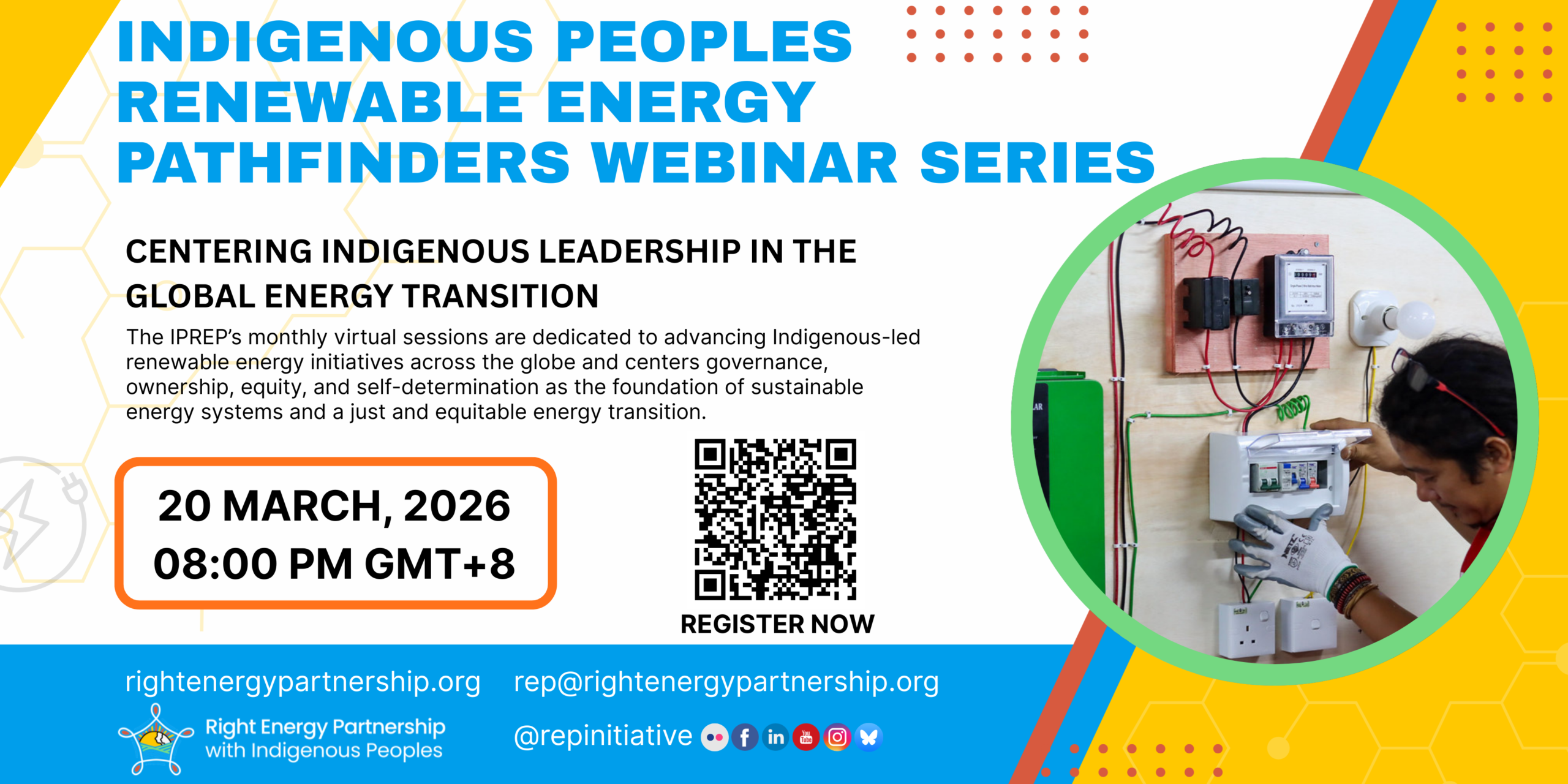
The Indigenous Peoples Renewable Energy Pathfinders Webinar Series is a new monthly platform dedicated to advancing Indigenous-led renewable energy initiatives across the globe. Designed as a space for dialogue, technical exchange, and policy reflection, the series brings together Indigenous leaders, community practitioners, youth advocates, women leaders, policymakers, researchers, and development partners to share grounded experiences from the front-lines of the energy transition. More than a discussion about infrastructure, this series centers governance, ownership, equity participation, and self-determination as the foundation of sustainable energy systems.
Each month, the webinar will spotlight one Indigenous community or organization to present its renewable energy journey. Sessions will begin with a profile of the featured community, exploring its governance structures, cultural context, territorial realities, and development priorities. Renewable energy will be framed as part of a broader ecosystem of Indigenous land stewardship, knowledge systems, and community resilience.
The featured initiative will then present the technical and operational dimensions of its renewable energy system, whether solar, micro-hydro, wind, hybrid, or other models. Presentations will examine ownership structures, financing mechanisms, implementation pathways, and long-term management arrangements. Particular attention will be given to how these systems address energy poverty, strengthen local livelihoods, improve access to essential services, and reinforce Indigenous governance over infrastructure and development decisions. The series will explore how Indigenous men, women, and youth actively participate in managing and overseeing their energy systems, and how accountability is maintained within community structures.
The Indigenous Peoples Renewable Energy Pathfinders Webinar Series seeks to amplify Indigenous-led solutions and build a global network of practitioners committed to equitable and self-determined energy transitions. Through sustained dialogue and shared learning, the platform will contribute to shaping policies and partnerships that recognize Indigenous Peoples not as beneficiaries of renewable energy development, but as leaders in designing and governing their own energy futures.
March 20: Inaugural Session with TONIBUNG

The inaugural session of the Indigenous Peoples Renewable Energy Pathfinders Webinar Series is re-scheduled for on the 20th March, featuring TONIBUNG, a Sabah-based (Malaysia) Indigenous-led organization that has become a regional reference point for community-driven renewable energy systems in Southeast Asia. TONIBUNG has spent years advancing decentralized energy solutions grounded in local governance, cultural integrity, and long-term community ownership.
TONIBUNG has implemented micro-hydro and solar mini-grid systems tailored to the ecological and social realities of each village. Their run-of-river micro-hydro installations harness local water resources without large-scale ecological disruption, while solar photovoltaic mini-grids provide reliable off-grid power for dispersed settlements. Each installation is accompanied by structured community training, ensuring that local technicians are equipped to operate, maintain, and troubleshoot systems independently.
As the first featured organization in the Indigenous Peoples Renewable Energy Pathfinders Webinar Series, TONIBUNG sets a strong precedent for what Indigenous-led renewable energy leadership looks like in practice. Their journey reflects the core principles of this platform: that sustainable energy transitions must be community-owned, governance-centered, and anchored in Indigenous knowledge systems.
JOIN THE PATHFINDERS
Register for the webinar
This session will provide participants with a grounded case study from Sabah, offering both technical insights and governance reflections that resonate across regions. It is an opportunity to engage directly with practitioners who have translated the vision of Indigenous Peoples energy sovereignty into operational reality.

0 Comments