
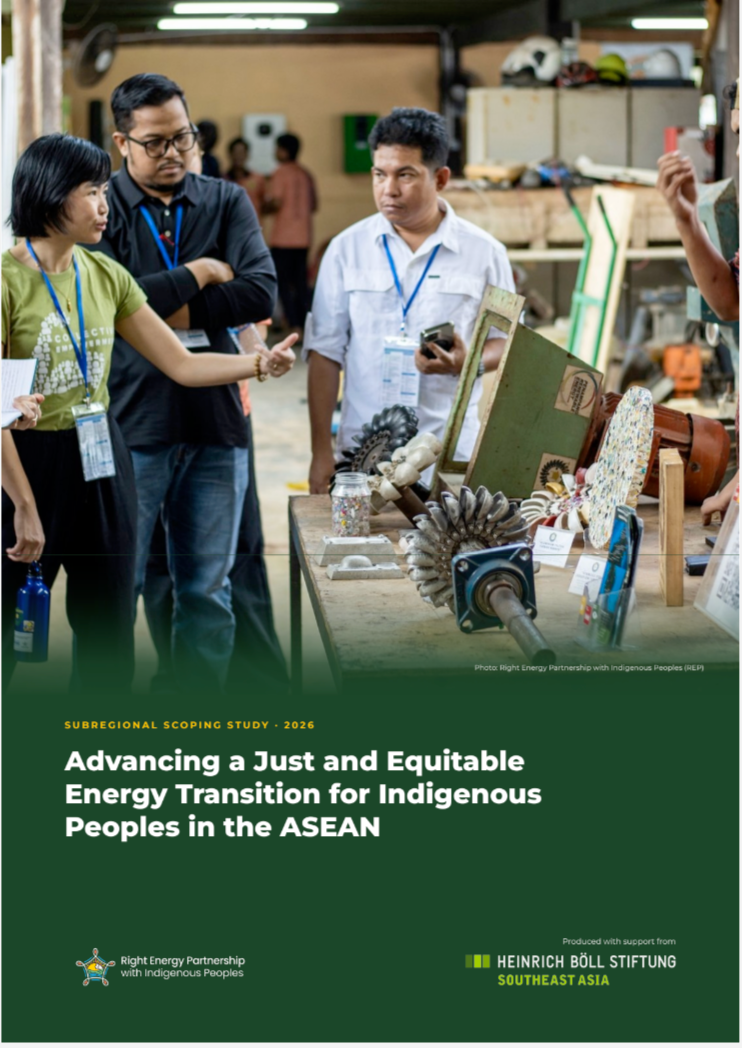
Southeast Asia’s energy transition is moving fast, and much of it is happening on Indigenous Peoples’ lands. Rivers, forests, geothermal fields and mineral deposits in Indigenous territories are being opened up for hydropower, solar, wind, biomass and mining for transition minerals. Yet many Indigenous communities still lack reliable, affordable electricity, and they are the least likely to benefit from these projects.
This study looks at how the transition is unfolding in Indigenous Peoples’ territories across the region. It also asks what it would take to bring regional and national energy policies in line with the UN Declaration on the Rights of Indigenous Peoples (UNDRIP) and other human rights standards. It reviews ASEAN energy and just-transition frameworks, including APAEC 2026–2030 and the newly adopted ASEAN Declaration on the Right to a Safe, Clean, Healthy and Sustainable Environment (ADER). It also covers national laws, Just Energy Transition Partnerships (JETPs) and Indigenous Peoples’ own energy initiatives. These include micro-hydro systems in the Cordillera, TONIBUNG’s community systems in Sabah, and the micro-hydro systems of Kasepuhan Gelaralam in Indonesia.
The study finds that:
- Indigenous Peoples remain energy poor in energy-rich lands
- Many large energy and mining projects go ahead without free, prior and informed consent (FPIC)
- Regional just-transition frameworks rarely name Indigenous Peoples or their collective rights
- Indigenous-led renewable energy works, but it is still treated as small pilots rather than a core strategy
- Indigenous leaders and defenders who resist harmful projects face serious risks
It calls on ASEAN bodies, governments and financiers to:
- Recognize Indigenous Peoples as rights-holders
- Make FPIC and human rights due diligence mandatory
- Build Indigenous Peoples’ rights into just-transition plans
- Create direct finance and simple regulations for community-owned energy
- Protect lands and defenders
- Include a dedicated Indigenous Peoples workstream in the ADER Regional Plan of Action
The study was produced with support from Heinrich Böll Stiftung Southeast Asia.
0 Comments