
REP & AIPNEE | ADB Annual Governors’ Meeting, Samarkand, Uzbekistan | 5 May 2026
KEY MESSAGES
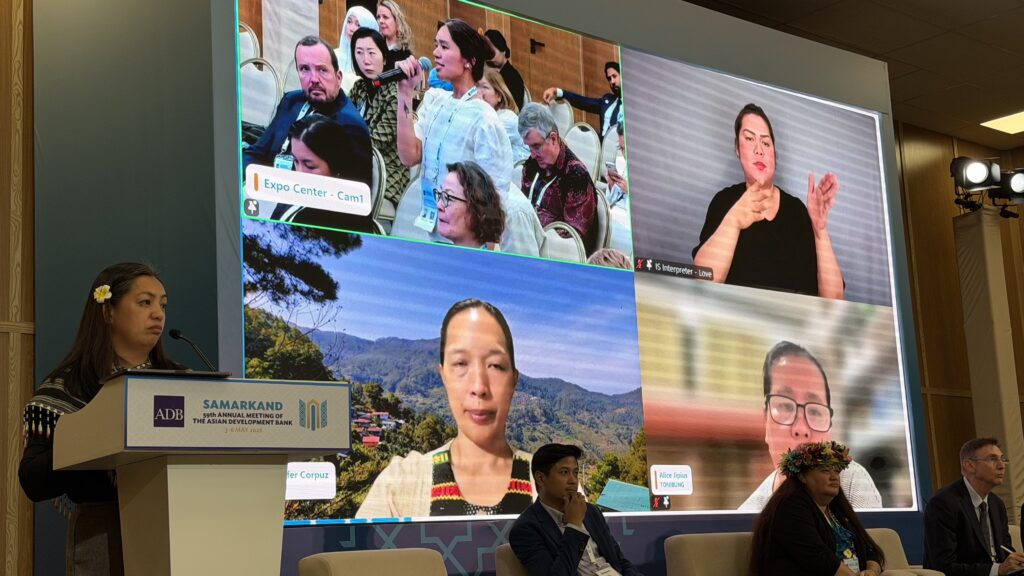
Indigenous Peoples across Asia-Pacific are not passive recipients of the energy transition — they are already leading it. From micro-hydro systems in Malaysia and Indonesia to community solar projects in Cambodia and Nepal, Indigenous Peoples are designing, owning, and managing their own renewable energy infrastructure grounded in Indigenous governance, traditional knowledge, and self-determined priorities. Yet they remain chronically under-resourced and are often the last to benefit from the large-scale energy projects built on their territories.
Energy poverty among Indigenous communities is vastly under-reported because statistics are rarely dis aggregated by ethnicity. Many communities still rely on wood or diesel or pay high prices for unreliable power — even as their lands host dams, wind farms, and transmission lines. Meanwhile, the growing demand for critical minerals is driving a new wave of extractive pressure, with more than half of energy transition mineral projects located on or near Indigenous lands, frequently without Free, Prior and Informed Consent (FPIC).
Community-led models work. TONIBUNG in Malaysia and community based renewable energy projects in Nepal have demonstrated that when communities hold genuine ownership — including decision-making authority and benefit-sharing — energy systems are more sustainable, livelihoods strengthen, Indigenous Peoples governance is reinforced, and territorial governance is strengthened. The energy transition, they argue, is ultimately about power: the power to decide, manage, and shape development.
RECOMMENDATIONS
Embed FPIC as a non-negotiable standard across all ADB-financed energy, infrastructure, and critical minerals projects — including the explicit right to say no — and apply it continuously throughout the project life cycle, including waste management and decommissioning.
Move beyond “do no harm.” ADB and multilateral financiers must actively resource Indigenous-led energy solutions with direct, flexible, long-term, and co-governed financing — not only safeguard-based risk mitigation.
Establish dedicated financing windows for Indigenous-led renewable energy initiatives, including small-grants mechanisms aligned with UN Declaration on the Rights of Indigenous Peoples (UNDRIP) and community-controlled governance structures.
Plan for end-of-life waste from energy equipment, particularly in remote Pacific islands, with communities and financiers sharing clear accountability from the outset.
Enforce zero tolerance on reprisals against community defenders and strengthen independent, culturally appropriate, and gender-responsive grievance mechanisms across all financed projects.
The session concluded with a call to make Indigenous Peoples leadership in the energy transition an accepted norm in policy, practice, and finance — not an isolated success story.
More photos can be found via our Flickr page

0 Comments