
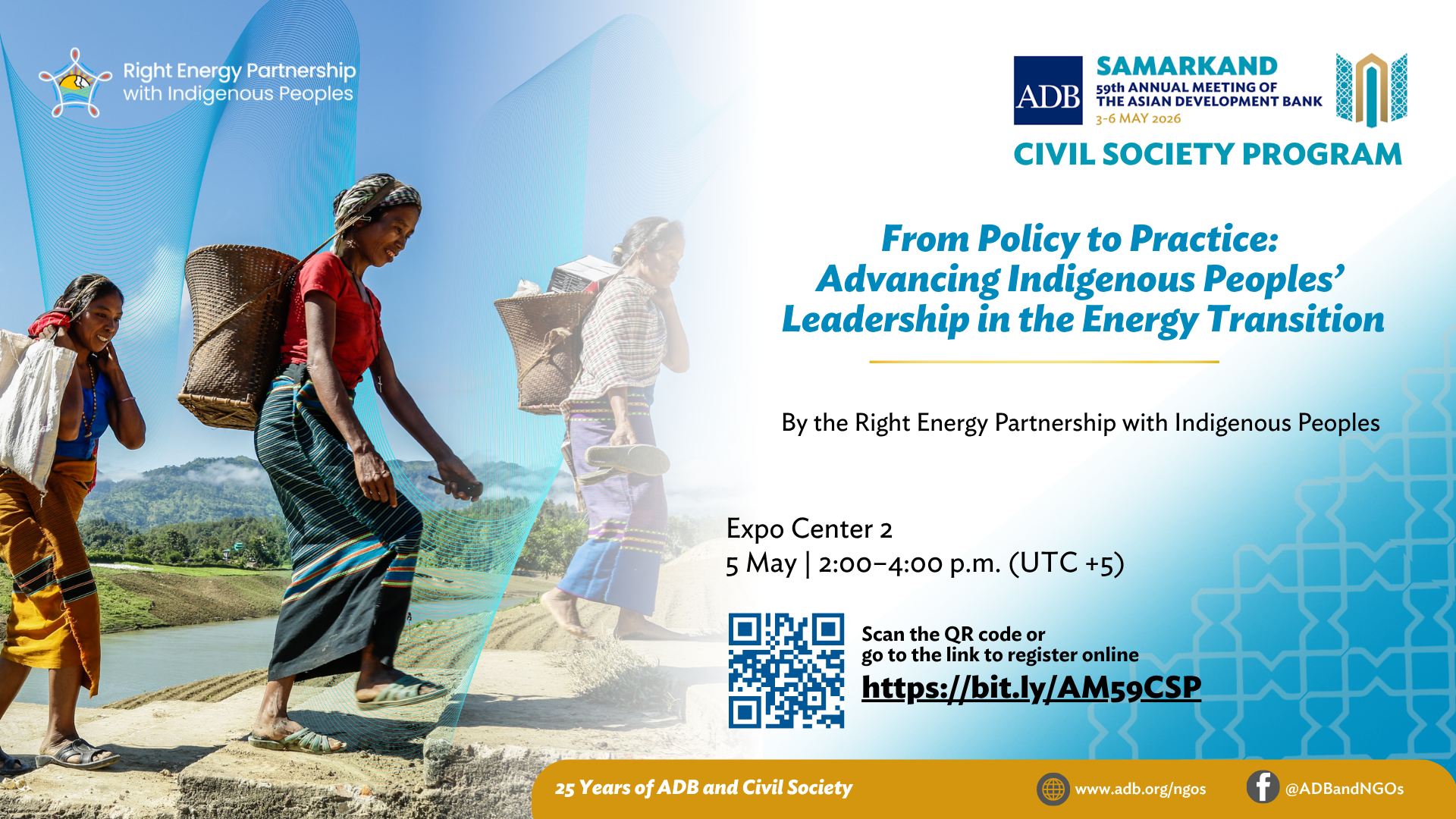
As the Asia-Pacific region accelerates toward renewable energy, the transition is increasingly framed as a pathway to sustainable development. Yet a critical gap remains. Across many contexts, projects continue to move forward without fully integrating the rights, governance systems, and leadership of Indigenous Peoples—raising questions about whether the transition is truly just.
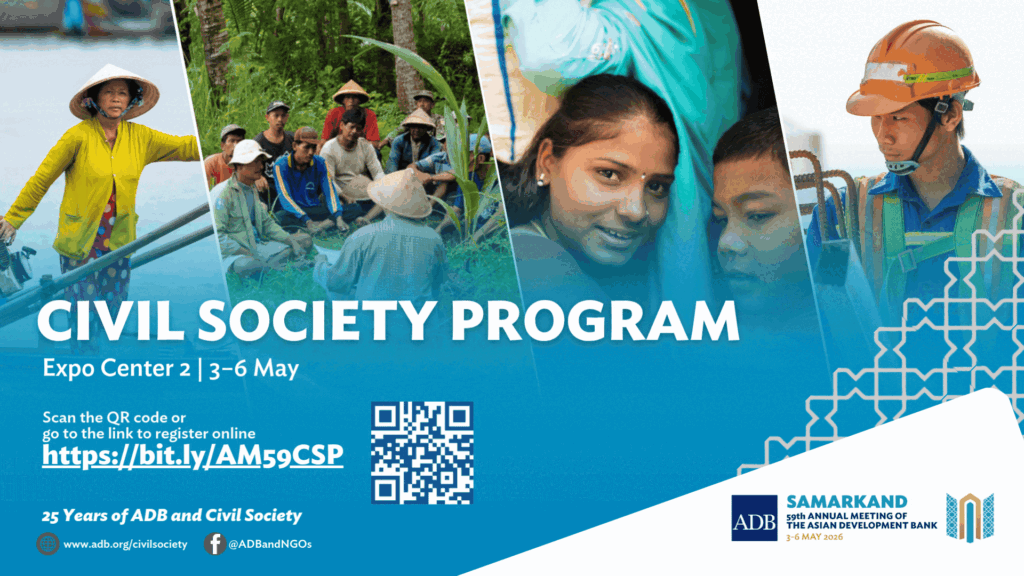
At the upcoming session convened in collaboration with partners at the Asian Development Bank Annual Meeting, the Right Energy Partnership with Indigenous Peoples (REP) will bring this issue into focus through “From Policy to Practice: Advancing Indigenous Peoples’ Leadership in the Energy Transition.” Organized alongside regional networks such as the Asia Indigenous Peoples Network on Extractive Industries and Energy, the session reflects a growing push to center Indigenous leadership in energy and development discourse.
Across Asia and the Pacific, Indigenous communities are already designing and managing renewable energy systems grounded in their knowledge, governance, and priorities. These initiatives are expanding energy access while strengthening resilience, protecting territories, and advancing self-determined development.
Through experiences from Malaysia, Nepal, and the Pacific, the session will highlight both the impact of Indigenous-led solutions and the barriers they face—particularly in financing, policy alignment, and institutional support. It will also examine the gap between commitments and implementation, especially in relation to Free, Prior and Informed Consent (FPIC).
By bringing together Indigenous leaders, practitioners, and policy actors, the session challenges dominant top-down models and advances Indigenous Peoples-led renewable energy as a viable development pathway—one that aligns climate action with rights, and connectivity with self-determination.

0 Comments