
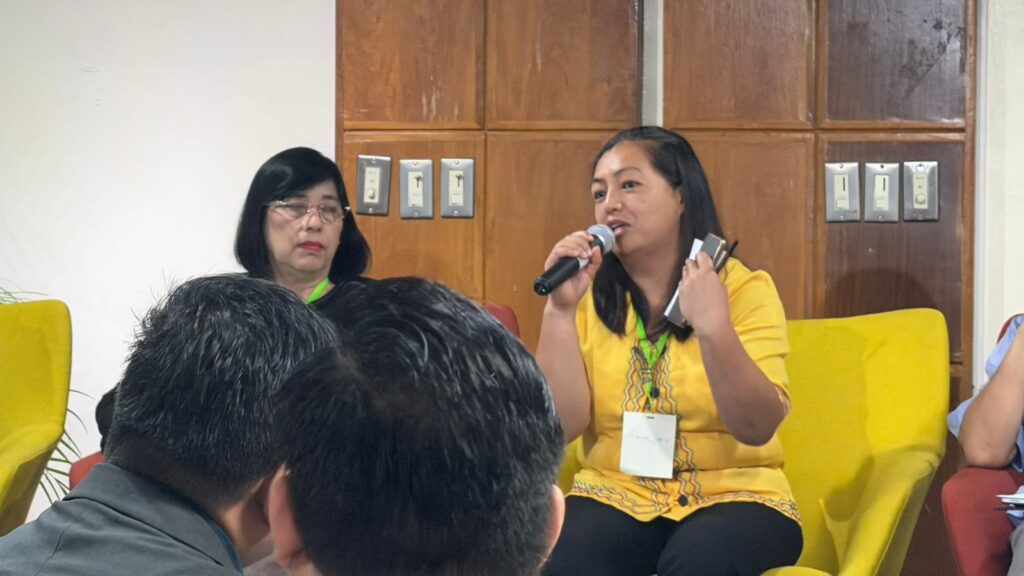
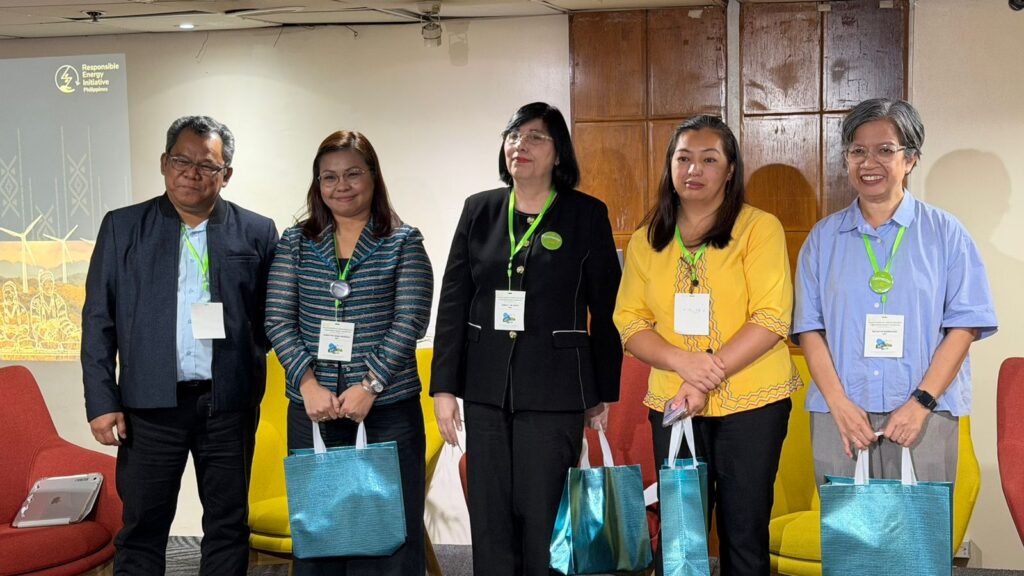
The Right Energy Partnership with Indigenous Peoples (REP) contributed to high-level discussions on advancing a responsible and just energy transition during the Responsible Energy Initiative (REI) Philippines Forum held in Manila on the 19th March 2026.
Representing REP, Executive Director, Robie Halip emphasized the need to move beyond conventional approaches to renewable energy development, calling for systems grounded in Indigenous Peoples’ rights, self-determination, and long-term sustainability.
“We Are Not Starting From Zero”
In her intervention, Robie challenged dominant narratives that frame the energy transition as a starting point for innovation.
Instead, she highlighted that Indigenous Peoples have long been practicing sustainable energy approaches, while existing material resources—particularly electronic waste—remain underutilized.
She stressed the need for increased investment in circular systems:
- Recycling existing materials
- Reducing pressure on finite natural resources
- Avoiding further extraction in biodiversity-rich Indigenous territories
This approach positions circularity not only as an environmental necessity, but as a strategic pathway to reduce mineral dependency in the transition.
The executive director also addressed the use of planning and risk assessment tools such as the RE Compass.
While acknowledging their value, she cautioned against their misuse by investors and developers.
According to REP, such tools must not reinforce exclusion by identifying Indigenous territories as areas to avoid due to perceived risks such as land tenure complexities or conflict.
Instead, they should support meaningful engagement, highlight existing Indigenous-led renewable energy initiatives and identify communities still lacking access to energy. Indigenous territories represent significant opportunities for sustainable energy development when approached through partnership and respect for rights.
Indigenous Women Leading the Transition
A key point raised during the session was the leadership of Indigenous women in renewable energy initiatives globally.
Robie highlighted examples from the Philippines, Malaysia, Canada, and Australia, where Indigenous women are actively shaping governance structures and driving clean energy solutions.
This growing leadership challenges prevailing narratives and reinforces the importance of inclusive, community-led approaches in the transition.
From Barriers to Enabling Frameworks
It was further emphasized that regulatory processes, including Free, Prior and Informed Consent (FPIC), should not be treated as barriers to development.
Instead, they are essential mechanisms for ensuring rights-based engagement and long-term project sustainability.
Drawing from international examples, Halip noted that where governments provide enabling legal frameworks, financing, and institutional support, Indigenous Peoples are able to scale renewable energy initiatives—from community-based systems to larger, utility-scale projects.
Anchoring the Transition in Transformative Justice
REP reiterated that the energy transition must not replicate “business as usual” models that marginalize Indigenous Peoples, since they are rights holders and not to be looked at as stakeholders. And hence human rights due diligence must be central to project development and whereas Indigenous data governance must be respected, including consent over data use
Robie further noted that failure to engage communities from the outset can lead to conflict and project breakdown, reinforcing the importance of early and meaningful participation.
REP concluded its intervention by reaffirming its commitment to working with REI Philippines, governments, and partners to advance Indigenous Peoples’ self-determined energy pathways.
Follow the Right Energy Partnership with Indigenous Peoples (REP) to learn how Indigenous leadership is shaping a just and equitable energy transition, and how partnerships grounded in rights and self-determination can drive lasting impact.
Facebook | Instagram | Bluesky | Flickr | YouTube | LinkedIn
0 Comments